
The outcome of the 2026 Governing Board Election is listed below. The board term for these individuals will be 2026-2029. To read their bio statement, click on the + next to their name.
Geographically-Restricted (0utside the United States)
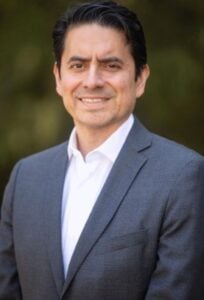
Arturo Flores holds a PhD in Politics from the University of York (UK) and a Master’s degree in Public Administration and Public Policy from the same institution. He earned his Bachelor’s degree in International Studies from the University of Monterrey.
Dr. Flores has extensive experience in international research projects and specializes in governance and public policy innovation. He serves as Co-Chair of the International Committee of the Urban Affairs Association (2024–2026). Since 2023, he has been an editor of the Journal of Urban Affairs and the Journal of Race, Ethnicity, and the City. In 2024, he became a Research Associate at the European Institute of International Studies (Sweden). Since August 2022, he has been the Coordinator of the Anahuac Global Research Center at the School of Global Studies at Anahuac Mexico University.
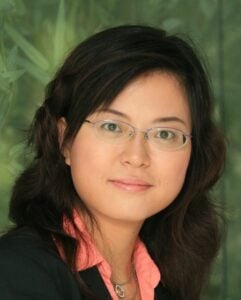 Zhilin Liu is Professor in the School of Public Policy and Management, Tsinghua University, China. She teaches undergraduate and graduate courses in research methodology, as well as graduate seminars on urban development and governance. Her research focuses on affordable housing, rural-to-urban migration, neighborhood governance, and sustainable cities. She has published widely in peer-reviewed journals such as Urban Studies, Landscape and Urban Planning, Journal of Planning Literature, Urban Affairs Review, and Housing Studies. She is the former chair of the International Association for China Planning (IACP) and currently serves as vice chair of the Asian-Pacific Network for Housing Research (APNHR). She has organized numerous events—including conferences, writing workshops, and career development roundtables—to promote international academic collaboration and support the career development of junior scholars in urban affairs. Zhilin received her Master’s degree in urban geography from Peking University, China, and Ph.D. in city and regional planning from Cornell University, USA.
Zhilin has been a UAA member since 2010. She has presented numerous papers at the UAA annual conferences and served as a panelist on career development workshops. She has served as an editorial member for JUA (2013-2020) and for UAR (2014-2023).
Zhilin hopes to expand the global outreach of UAA as a leading academic organization in the study of urban affairs. She also wants to contribute to UAA’s initiatives to support junior scholars’ career development.
Geographically-Unrestricted
 Meagan Ehlenz is an Associate Professor in the School of Geographical Sciences & Urban Planning at Arizona State University. She serves as Associate Director of Planning for ASU’s undergraduate and graduate urban planning programs, including teaching about planning practice and community-engaged capstone courses. Her research broadly focuses on housing, neighborhood change, and community development, including the role of universities as anchor institutions and the impact of shared equity homeownership models. She currently serves as an Associate Editor for the Journal of Planning Education & Research and serves on the APA Arizona Board. Before academia, Meagan was a senior planner in the public and private sectors. She earned her Master of Urban Planning from UW-Milwaukee and her PhD in City & Regional Planning from the University of Pennsylvania.
In service to UAA, Meagan has served as the inaugural Mid-to-Advanced Career (MAC) Professional Development Coordinator for the last two years. Before that, she served as a committee member and panelist for professional development activities. She is dedicated to extending mentorship and professional development opportunities throughout UAA. As a UAA member, she has also presented at UAA conferences and organized panels for more than a decade.
Meagan seeks election to the Board to continue investing in UAA’s professional development and mentorship infrastructure. Specifically, she wants to ensure UAA’s resources both reflect and reach its diverse membership, including professional development for career-track faculty, non-academic scholars, and researchers who are transitioning into or out of academia.
 Tia Sherèe Gaynor, PhD, (she/her) is an associate professor of leadership and management at the Humphrey School of Public Affairs at the University Minnesota – Twin Cities.
She is a community-engaged scholar immersed in equity and inclusion. Her previous research explored the intersection of social justice, local government, and identity. More specifically, conducting work that focused on the ways identity-based narratives, negative social constructions, and decision-making lead to inequitable outcomes for people of color, those who identify as LGBTQIA, and people at the intersections of these and other identities. Building off this research stream, Tia’s most recent research sits at the nexus of contemplative practice (mindfulness and meditation), leadership, and equity. Through this work, Tia explores the role of human- and healing-centered leadership in producing just and equitable outcomes for those that experience structural injustice and systemic oppression.
Tia is a trained meditation and mindfulness facilitator and a certified justice and liberation coach. Previously, she was at the University of Cincinnati, serving as a faculty member in the School of Public and International Affairs, Taft Professor of Social Justice, and founding director of the Center for Truth, Racial Healing & Transformation.
She holds a PhD and MPA from the School of Public Affairs and Administration at Rutgers University – Newark. She received her BA in psychology from Rutgers University – New Brunswick. Additionally, she holds a Diversity Management Certification from the University of Houston’s International Institute for Diversity.
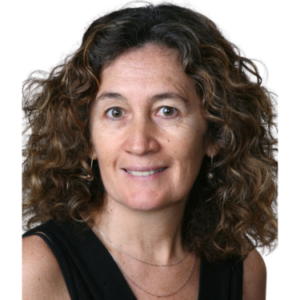
Cecilia Giusti retired from Texas A&M University in 2025, where she was Associate Professor in the Department of Landscape Architecture and Urban Planning. She taught undergraduate and graduate courses in economic development and planning, with emphasis on the developing world and Latin America. Her research focuses on microfinancing, micro businesses and their contribution to local economic development focusing on minorities as well as urban Latin American urban issues. Her research has appeared in the Journal of the American Planning Association, Urban Studies, among others. She co-edited a Journal of Urban Affairs special issue on Latin America Cities. Cecilia bachelor’s degree is from the Catholic University, Peru; her M.A. from the Institute of Social Studies, Holland; and her Ph.D. from the University of Texas at Austin.
Cecilia’s service to UAA includes work on the Best Book Award Committee, local and technical conference committees, mentor lunches; she has organized several panels and presented numerous papers at the UAA conferences. Cecilia co-pioneered the Latin American and The Caribbean Network LACUAnet, and has organized several LACUAnet activities.
Cecilia seeks election to the Board to help develop policies that increase visibility to research beyond current participants, including Latin America and the developing world. She states that the contribution of the global south has not been widely acknowledged among UAA peers and is not reflected in annual conferences and journals. She proposes that Latin America and the Global South research and activism become relevant to urban research and innovative urban policies.
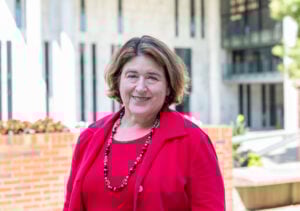 Rachel Garshick Kleit is Associate Dean in the College of Engineering and Professor of City and Regional Planning in the Knowlton School at The Ohio State University. She is also Editor in Chief of the Journal of Planning Literature. Her research examines affordable housing and social inequality. Her work has appeared in leading journals, including Housing Policy Debate, Journal of the American Planning Association, Journal of Regional Science, Journal of Urban Affairs, Social Networks, and Urban Studies. Her MA in Urban and Environmental Policy is from Tufts and PhD in City and Regional Planning is from the University of North Carolina at Chapel Hill.
Rachel previously served on the UAA Governing Board (2011–2016) and chaired both the Personnel and Benefits Committee (2013–2015) and the Finance Committee (2011–2013). Additional service includes the Alma Young Emerging Scholar Award Committee (2008–2009; 2009–2010, chair), the Ad Hoc Committee on the Future Location of the Executive Office (2010–2011), and the Contributions to the Field Award Committee (2025–2026). She has been a Publishing Fellow Mentor (2024–2025) and a Speed Mentor (2022, 2023, 2024). Rachel has served on the Journal of Urban Affairs editorial board since 2006, was Associate Editor (2009–2010), and was on the Best Paper Committee four times. She received the Sage–Urban Affairs Association Young Scholar Award (1998) and was named to the Distinguished Service Honor Roll (2021).
Rachel seeks election to advance UAA’s mission to foster a diverse, global community of interdisciplinary urban scholars.
 Kimberly Mayfield is the incoming Dean of the Kalmanovitz School of Education at St. Mary’s College of California. Currently she is the Chief Learning and Innovation Officer at Oakland Natives Give Back. From February 2023- December 2024 she was Deputy Mayor of Oakland California. Prior to her time in government, she was Dean of the School of Education and Vice President for External Relations and Strategic Partnerships at Holy Names University Before becoming Dean and Vice President, she was a tenured Associate Professor in education who taught undergraduate and graduate students seeking professions in the field of education.
Kimberly has led community initiatives to increase diversity in the teaching profession particularly in urban school districts. Kimberly earned a masters and doctorate degrees in Teaching and Learning. Her research interests include increasing the racial and ethnic diversity in the teaching profession, reducing the overrepresentation of African American males who receive special education services and increasing daily attendance in schools. She has served as a member of the UAA Governing Board, UAA Finance Committee, UAA Awards Committee, organized pre conference sessions for early career faculty on activism and the promotion and tenure process. Kimberly has presented extensively at UAA conferences on increasing daily attendance in urban school districts and removing barriers to teaching for diverse citizens. As a board member she would like to develop policies that support activism in the academy and strengthen collaboration between community based initiatives and the work in academia.
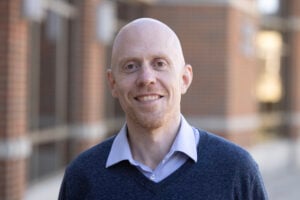 Thomas Skuzinski is Associate Professor and Chair of the Department of Public Administration at Northern Illinois University, where he also serves as Director of the Institute for the Study of the Environment, Sustainability, and Energy. His teaching spans graduate and undergraduate courses in urban planning, public administration, law, and sustainability. His research focuses on regional governance, interlocal cooperation, and the institutional dimensions of sustainability, with particular attention to polycentric systems and local government capacity. His work has appeared in journals such as Journal of Urban Affairs, Journal of Planning Education and Research, and Transport Policy, and includes a book on regional governance published by Routledge. Prior to and alongside his academic career, he has engaged extensively with public sector partners on planning, infrastructure, and sustainability initiatives. He holds a Ph.D. and Master of Urban Planning from the University of Michigan and a J.D. from Michigan State University.
Thomas has a longstanding record of service to the Urban Affairs Association, including serving as Chair of the Best Book Award Committee and Chair of the Contributions to the Field of Urban Affairs Committee. He has also served on the UAA Governing Board Nominations Committee. He has regularly presented, organized, and moderated panels at the Urban Affairs Association annual conference on topics related to regional governance, land use, and sustainability.
Thomas seeks election to the UAA Board to support the continued development of the association as a central forum for rigorous, policy-relevant urban and metropolitan scholarship. He is particularly interested in strengthening connections between academic research and practitioner communities. He also hopes to grow mentorship opportunities for emerging and early career scholars, especially those who are navigating professional and personal challenges.
Thomas considers UAA his professional association home. He first attended a UAA conference in 2009 and is eager to give back in a more committed way.
