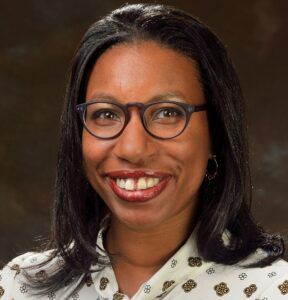
Akira Drake Rodriguez (University of Pennsylvania) has been selected to receive the 2026 Best Article in the Journal of Race, Ethnicity and the City Award for her paper “Reparative-advocacy planning to address racialized inequities in public school facilities”.
This annual award gives recognition to a paper published in the Journal of Race, Ethnicity and the City that is considered particularly outstanding as a scholarly contribution to the field of urban affairs. Her paper was selected from amongst an international array of articles published in Volume 6 (2025).
AWARD COMMITTEE ASSESSMENT
The article “Reparative-advocacy planning to address racialized inequities in public school facilities” by Akira Drake Rodriguez makes an outstanding contribution to urban affairs scholarship and practice through its rigorous, innovative, and justice-centered examination of school facility planning in Philadelphia. Through a thoughtfully executed participatory action research design, the study illuminates how histories of racialized disinvestment shape contemporary planning processes, particularly in nonwhite and non-affluent neighborhoods.
The paper advances the field by introducing a reparative-advocacy planning framework that moves beyond technocratic, data-driven approaches to explicitly identify and address racialized harms embedded in institutional decision making. By combining methodological rigor, conceptual innovation, and deep engagement with community-based practice in three case studies, the article offers actionable insights for planners, policymakers, and advocates seeking to advance racial equity and accountability in urban governance. Its clarity, accessibility, and demonstrated impact on both scholarship and practice make it a highly deserving recipient of the Best Paper in Journal of Race, Ethnicity and City 2026 Award.
AWARD RECIPIENT BIO
Akira Drake Rodriguez is an Assistant Professor at the University of Pennsylvania’s Weitzman School of Design. Her research examines the ways that disenfranchised groups re-appropriate their marginalized spaces in the city to gain access to and sustain urban political power. She is the author of Diverging Space for Deviants: The Politics of Atlanta’s Public Housing, which explores how the politics of public housing planning and race in Atlanta created a politics of resistance within its public housing developments. She is also the lead author of A Green New Deal for K-12 Schools, through her work with the climate + community project. She has received funding from the Spencer Foundation and the University of Pennsylvania’s Environmental Innovation Initiative and Projects for Progress funds to support her work around school facilities planning in Philadelphia public schools. She has been a member of UAA since 2012, and has served on the board since 2020.
AWARD PRESENTATION
The formal presentation of this award will be made at the upcoming International Conference on Urban Affairs in Chicago, Illinois. The theme of this year’s conference is No Little Plans: Realizing Urban Futures in Times of Crisis. The conference will convene 1100+ participants from 55+ countries and representing 20+ fields of study. All award recipients will be formally recognized for their achievements during the Awards and Recognition Program on April 29, 2026; 3:00 – 4:15pm.
AWARD COMMITTEE MEMBERS
Amit Patel, World Bank (Chair); Ryan Good, Eastern Mennonite University; Patricia Posey, University of Chicago; Wenfei Xu, Cornell University
ABOUT THE URBAN AFFAIRS ASSOCIATION
The Urban Affairs Association (UAA) is an international professional organization for 1000+ urban scholars, researchers, policy analysts, & public service providers. UAA is dedicated to creating interdisciplinary spaces for engaging in intellectual and practical discussions about urban life. Through theoretical, empirical, and action-oriented research, UAA fosters diverse activities to understand and shape a more just and equitable urban world.
In addition to hosting an annual conference, UAA sponsors ongoing professional development opportunities; Upsilon Sigma: The Urban Studies Honor Society; and two peer-reviewed journals, the Journal of Urban Affairs and the Journal of Race, Ethnicity and the City. You can find UAA on the web, LinkedIn, Bluesky, Facebook, and X.